

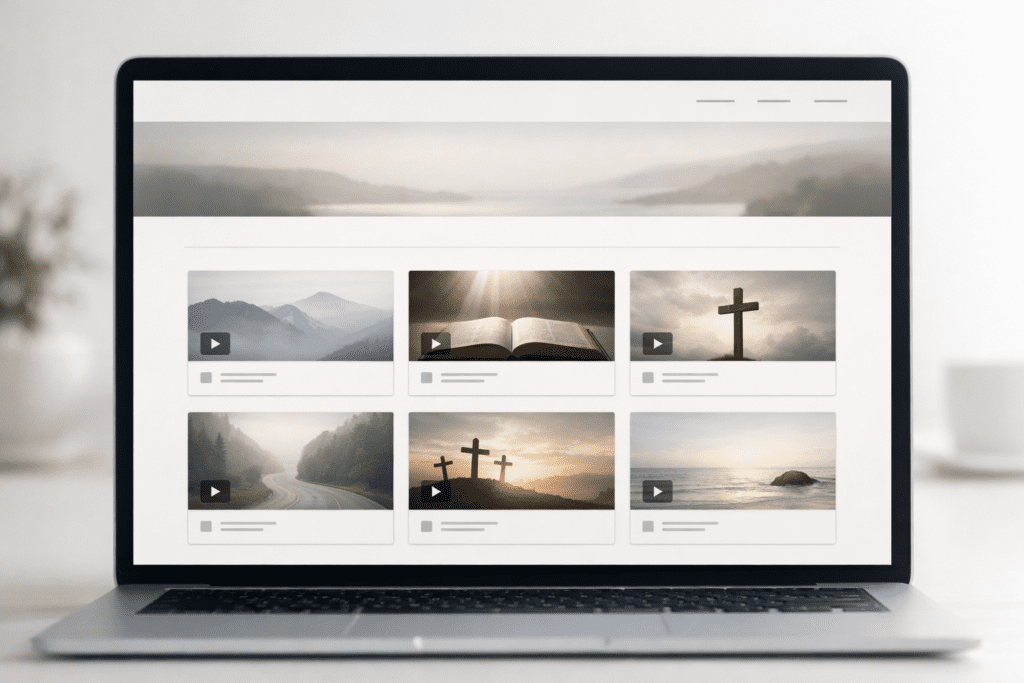
Sermon series pages help churches organize messages, improve sermon discovery, and extend the life of weekly teaching. Instead of treating each sermon as a standalone resource, sermon series pages group related messages into a clear, purposeful journey that is easier to understand, revisit, and share.
For both regular attenders and first-time visitors, a well-built sermon series page provides structure, clarity, and context—turning your sermon archive into a long-term discipleship resource rather than a forgotten media library.
How should a church organize a sermon archive by series?
The most effective way to organize a sermon archive is by grouping messages into sermon series rather than listing sermons only by date. While chronological lists may work for internal staff use, they create friction for website visitors who are searching by topic or theme.
Organizing sermons by series allows churches to tell a cohesive teaching story. Each series becomes a container for related sermons, helping listeners understand how individual messages connect to a broader biblical or practical theme.
Using sermon management tools, churches can create a structure where:
- Each sermon series has its own dedicated hub page
- Individual sermons are grouped within that series
- Messages can still be filtered by date, speaker, or topic
This approach supports both clarity and flexibility, making it easier for people to explore sermons in a way that fits their needs.
What information should be included on a sermon series page?
A sermon series page should answer three basic questions for visitors: What is this series about? Who is it for? How do I engage with the sermons?
To do that effectively, each sermon series page should include the following core elements:
- Series title: A clear, descriptive title that reflects the main theme
- Series description: One or two short paragraphs explaining the purpose and focus of the series
- Date range: When the series was preached, which adds context and relevance
- Ordered sermon list: Sermons displayed in the intended listening or viewing sequence
- Sermon media: Embedded video or audio when available
- Sermon notes or summaries: Optional but valuable for deeper engagement
Including these elements ensures that visitors immediately understand the value of the series and how to explore it further.
Why do sermon series pages improve sermon discovery?
Sermon discovery improves when people can browse by interest instead of guessing which sermon to click. Sermon series pages reduce decision fatigue by grouping related messages together.
Instead of scrolling through dozens of sermons with unfamiliar titles, visitors can select a series that matches their current questions, season of life, or spiritual interests.
This structure also aligns with church website design best practices by improving navigation and content hierarchy. Clear content organization helps visitors stay on your site longer and engage more deeply.
Well-organized sermon series pages encourage:
- Listening to multiple sermons in one visit
- Sharing a full series rather than a single message
- Returning to the site to finish a series
How do sermon series pages support discipleship beyond Sunday?
Sermon series pages extend teaching beyond the weekend by making sermons accessible throughout the week. Members can revisit messages, catch up on missed weeks, or study the series at their own pace.
For small groups, families, and individual study, sermon series pages provide a consistent reference point. Leaders can easily direct people to an entire teaching series rather than hunting for individual sermons.
Over time, this creates a growing discipleship library that supports spiritual growth well beyond Sunday services.
How do sermon series pages help with sermon SEO?
Sermon series pages naturally support sermon SEO by creating topic-focused content hubs. Search engines prefer organized pages that clearly explain a subject and link to related content.
A well-structured series page allows churches to:
- Target broader teaching themes rather than single sermon titles
- Internally link related sermons in a meaningful way
- Keep older sermons visible in search results
Each individual sermon can rank for more specific searches, while the sermon series page acts as the authoritative overview for the topic.
Should older sermon series still be published?
Yes. Older sermon series continue to provide value long after the final message is preached. Many people explore past sermons when deciding whether to visit a church or return after time away.
Keeping older series published and organized:
- Demonstrates teaching consistency
- Shows theological depth over time
- Builds trust with new visitors
Removing or hiding older sermon series limits the long-term value of your teaching and reduces the depth of your sermon library.
What mistakes should churches avoid with sermon series pages?
Common mistakes can reduce the effectiveness of sermon series pages, even when the content itself is strong.
- Leaving series pages without descriptions
- Listing sermons without a clear order
- Missing or broken media links
- Inconsistent formatting across series
Consistency and clarity matter. A sermon series page should feel complete and intentional, not like an afterthought.
FAQ: Sermon Series Pages
What is a sermon series page?
A sermon series page is a dedicated page that groups all sermons from a specific teaching series into one organized hub.
How many sermons should a series include?
There is no fixed number. A sermon series may include anywhere from a few sermons to several weeks or months of teaching.
Should sermon series pages include video or audio?
Whenever possible, include embedded media to make sermons easy to watch or listen to without extra clicks.
Can sermon series pages help first-time visitors?
Yes. They help visitors quickly understand what your church teaches and explore topics relevant to their questions.
Do sermon series pages replace individual sermon pages?
No. Sermon series pages act as hubs, while individual sermon pages provide detailed content for each message.
How often should sermon series pages be updated?
They should be updated whenever a new sermon is added, notes are uploaded, or media links change.
Are sermon series pages useful for small groups?
Yes. They make it easy for small groups to follow, review, or revisit a complete teaching series.
Using sermon series pages as part of your church tech strategy
Sermon series pages are most effective when they are part of a larger system that connects sermons, media, and website content into one workflow.
If your church wants to simplify sermon organization and improve sermon discovery, it may be helpful to explore church software solutions designed to support sermon management and long-term content organization.