

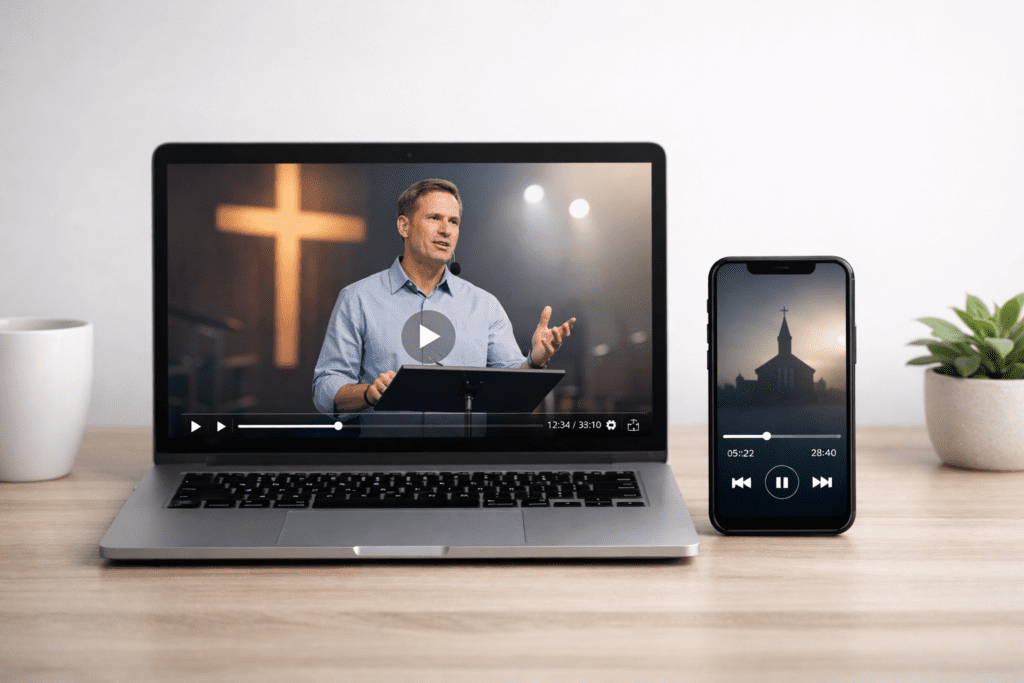
Sermon SEO is the process of organizing, publishing, and optimizing your sermons so people can easily find them through search engines like Google. When done well, sermon SEO helps your messages reach people who may never walk into your church but are actively searching for biblical answers, encouragement, or teaching.
Many churches faithfully record sermons each week, but without sermon SEO, those messages often stay hidden. With a few intentional steps, your sermon archive can become a long-term outreach tool.
What is sermon SEO and why does it matter for churches?
Sermon SEO simply means making your sermons understandable and discoverable to search engines. This includes how sermons are titled, described, categorized, and published on your website.
People search online every day for topics like anxiety, forgiveness, marriage, prayer, or specific Bible passages. When your sermon content is optimized, your church can appear in those searches and serve people at the exact moment they are seeking help.
Sermon SEO matters because it extends the life of your sermons far beyond Sunday. A sermon preached once can continue reaching people for years when it is properly organized and searchable.
How should a church organize a sermon archive for SEO?
A well-organized sermon archive is the foundation of effective sermon SEO. Search engines favor content that is clearly structured and easy for users to navigate.
- Use consistent sermon titles: Clear, descriptive titles perform better than vague or internal language.
- Group sermons into series: Series pages help search engines understand topical relevance.
- Organize by speaker and date: This helps both members and search engines navigate your content.
- Create individual pages for each sermon: Each sermon should have its own unique URL.
Using dedicated sermon management tools makes it easier to maintain a structured sermon library without relying on manual processes.
What sermon details help sermons rank better in search results?
Search engines rely on context. The more helpful information you provide, the better they understand what your sermon is about.
- Sermon description: Write a short summary explaining the main theme and takeaway.
- Scripture references: Include primary Bible passages discussed.
- Sermon topics: Clearly label topics like prayer, faith, marriage, or leadership.
- Speaker name: Especially important if people search for a specific pastor.
These details not only improve sermon SEO but also create a better experience for visitors exploring your sermon library.
How does sermon SEO support church outreach?
Sermon SEO allows your church to meet people where they already are—online. Many people search for answers long before they are ready to attend a service.
When your sermons appear in search results, your church becomes a trusted voice during moments of spiritual curiosity, crisis, or growth. Over time, sermon SEO supports digital discipleship by consistently placing biblical teaching in front of people who need it.
This works best when sermon content is published on a well-structured website. Thoughtful church website design plays a major role in how effectively sermons are indexed and presented.
What mistakes hurt sermon SEO?
Many churches unintentionally limit their sermon visibility. Common sermon SEO mistakes include:
- Uploading sermons without descriptions
- Using inconsistent or unclear sermon titles
- Hosting sermons only on third-party platforms without embedding them on the church website
- Mixing sermons into blog posts instead of dedicated sermon pages
Avoiding these mistakes helps ensure your sermons are treated as valuable content rather than hidden media files.
How often should churches update their sermon archive?
Sermon SEO improves when your sermon archive is regularly updated and maintained. This does not require rewriting old sermons, but it does mean:
- Adding missing descriptions or Scripture references
- Ensuring series pages are complete
- Checking that media links still work
Regular maintenance signals to search engines that your content is active, relevant, and trustworthy.
Frequently Asked Questions About Sermon SEO
Do sermons really show up in Google searches?
Yes. Sermons can rank in search results when they are properly published with clear titles, descriptions, and topics.
Is sermon SEO only for large churches?
No. Small and mid-sized churches often benefit the most because sermon SEO helps extend reach without increasing marketing costs.
Should sermons be published as videos or audio?
Both formats work well for sermon SEO when paired with written descriptions and structured pages.
How long does sermon SEO take to work?
Sermon SEO is a long-term strategy. Results often grow gradually as your sermon library expands.
Do sermon series help with SEO?
Yes. Series create topical authority and help search engines understand how sermons relate to one another.
Is it okay to reuse sermon titles?
It is better to keep titles unique to avoid confusion for both visitors and search engines.
Can old sermons still be optimized?
Yes. Adding descriptions, topics, and Scripture references can significantly improve older sermons.
If your church wants a simpler way to organize, publish, and optimize sermons, you may want to explore church technology solutions designed to support sermon management and long-term digital outreach.