

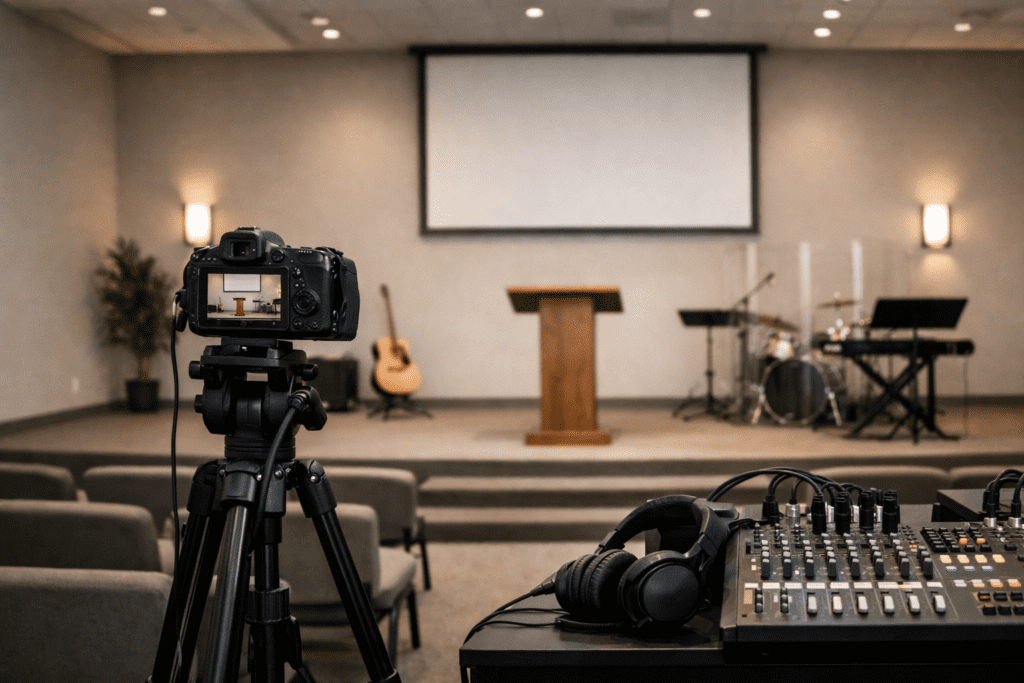
Church leaders today face an important question: how should sermons be shared beyond Sunday morning? The conversation is no longer just about recording messages, but about choosing the right formats and platforms so teaching can reach people where they already are. At the center of this discussion is sermon video—how it compares to audio, where each belongs, and how churches can steward both wisely.
Decisions about publishing sermons are not merely technical. They are pastoral decisions that affect accessibility, discipleship, and generosity. When people can clearly hear and see the message, they are more likely to engage, trust, and stay connected to the mission of the church. That connection often flows naturally into participation, including giving, which is why many churches think about sermon publishing alongside tools like church donation management tools that support generosity in a clear and organized way.
Why sermon video has become the primary format
Sermon video has become the dominant way churches share teaching online because it aligns with how people consume content today. Most people are accustomed to watching videos on their phones, tablets, and computers. A recorded message that includes visuals, tone, and body language feels more personal than audio alone.
From a pastoral perspective, video allows viewers to sense the heart behind the words. Facial expressions, pauses, and gestures all reinforce meaning. For first-time viewers especially, sermon video provides a fuller picture of a church’s culture and teaching style.
Another reason sermon video leads is discoverability. Search engines and social platforms prioritize video content, making it easier for messages to surface in search results or recommended feeds. This increased visibility gives churches an opportunity to speak into people’s lives long before they ever walk through the doors.
When sermon video is most effective
Sermon video is especially effective when churches want to reach new audiences or extend the impact of a message beyond a single gathering. A well-produced recording can be shared on a website, embedded in emails, or clipped into shorter segments for social media.
For teaching series, video helps people catch up if they miss a week. Seeing the same stage, setting, and speaker week after week reinforces continuity and helps viewers feel connected to the journey. Over time, a consistent library of sermon video becomes a trusted resource for both members and seekers.
Video is also effective for visual learners. Slides, scripture references, and illustrations are easier to follow when they are seen rather than described. This clarity supports understanding and retention.
The continued role of sermon audio
While sermon video often takes priority, sermon audio still plays an important role. Many people prefer listening during commutes, workouts, or while doing household tasks. Audio files are convenient, lightweight, and easy to download for offline use.
From a pastoral standpoint, offering audio communicates care for different rhythms of life. Not everyone has the time or bandwidth to watch a full video, but many will listen if the option is available. Providing both formats honors these differences without forcing a one-size-fits-all approach.
Audio also serves members who want to revisit a message for reflection or prayer. A sermon heard again later in the week can reinforce spiritual growth and application.
Sermon video and accessibility
Accessibility is another key reason to prioritize sermon video thoughtfully. Video can be paired with captions, making messages more accessible to those who are hard of hearing or who prefer reading along. Clear visuals also help viewers who struggle with attention or comprehension.
For multilingual or multicultural contexts, sermon video can support translation or interpretation efforts more effectively than audio alone. Seeing the speaker helps viewers follow along even when language barriers exist.
Accessibility is ultimately about hospitality. When churches invest in clear, usable sermon video, they are removing obstacles that might otherwise keep people from engaging with the Word.
Where sermon video should be published
Publishing sermon video in the right places matters just as much as recording it. Most churches start with their own website, where sermons can be organized by date, series, or topic. This creates a central hub that members can trust.
Social platforms also play a role, especially for reaching new audiences. Short clips or highlights can invite curiosity and encourage people to watch the full message elsewhere. The goal is not to overwhelm every platform with full-length content, but to use each channel wisely.
Many churches rely on all-in-one church management software to keep sermon content integrated with other ministries. When sermons live alongside events, groups, and giving, the church’s digital presence feels cohesive rather than fragmented.
How sermon video supports discipleship
Sermon video is not just about broadcasting information; it is a discipleship tool. When messages are easy to access, people are more likely to revisit teaching, share it with others, and discuss it in small groups.
Leaders can encourage members to watch or rewatch sermons as part of personal devotions or group discussions. Video provides a shared reference point that keeps everyone aligned with the same teaching and vision.
Over time, a strong sermon video library becomes a teaching archive that reflects the theological foundations and pastoral voice of the church.
Balancing quality and authenticity
One concern churches often have is production quality. While clear audio and stable video are important, perfection is not the goal. Viewers are usually more interested in authenticity than polish.
A simple, well-lit recording that clearly captures the message is often more effective than an overly complex setup that distracts from the teaching. The focus should remain on clarity and consistency rather than constant upgrades.
Pastorally, this balance communicates humility and stewardship. Churches can model wise use of resources while still offering content that serves people well.
Integrating sermon video with generosity
Sermon video often leads naturally into generosity conversations. When people are spiritually fed and feel connected to the mission, they are more open to supporting it financially.
This is why churches benefit from integrating sermon publishing with giving systems. Clear pathways from teaching to action—such as responding to a call to give—help people take next steps without friction.
Thoughtful integration reinforces the idea that generosity is a response to God’s work, not a separate or awkward add-on.
Pastoral guidance for choosing formats
Choosing between sermon video and audio does not have to be an either-or decision. Most churches are best served by offering both, with video as the primary format and audio as a supportive option.
Leaders should consider their congregation’s habits, resources, and goals. A smaller church with limited volunteers can still record meaningful sermon video with simple equipment. What matters most is consistency and care.
Pastoral leadership involves asking not just what is possible, but what is helpful for the people God has entrusted to the church.
Building trust through consistent sermon video
Consistency builds trust. When people know they can rely on regular sermon video uploads, they are more likely to return and engage. Missed weeks or disorganized archives can quietly erode confidence.
Establishing a simple workflow for recording, uploading, and organizing sermons helps prevent burnout and confusion. Over time, this rhythm becomes part of the church’s ministry infrastructure.
Trust grows when people see that the church values their time and attention enough to provide content that is easy to access and dependable.
Long-term value of a sermon library
A growing collection of sermon video is an investment in the future. Messages preached today may continue to encourage and instruct years from now. New members can explore past series to understand the church’s teaching foundation.
For pastoral teams, this archive also serves as a record of growth and direction. It reflects seasons of ministry, challenges faced, and truths emphasized along the way.
Stewarded well, a sermon library becomes part of the church’s legacy.
Making wise next steps
Ultimately, the question of sermon video versus audio is about clarity and care. Video leads because it communicates more fully and reaches more people, while audio supports flexibility and accessibility.
Churches do not need to chase every trend, but they do need to be attentive to how people engage with content. By prioritizing sermon video and supporting it with thoughtful systems, churches can extend their teaching ministry with confidence.
If you want to see how sermon publishing, communication, and giving can work together seamlessly, see how Connect My Church works and explore tools designed to support your ministry beyond Sunday.