

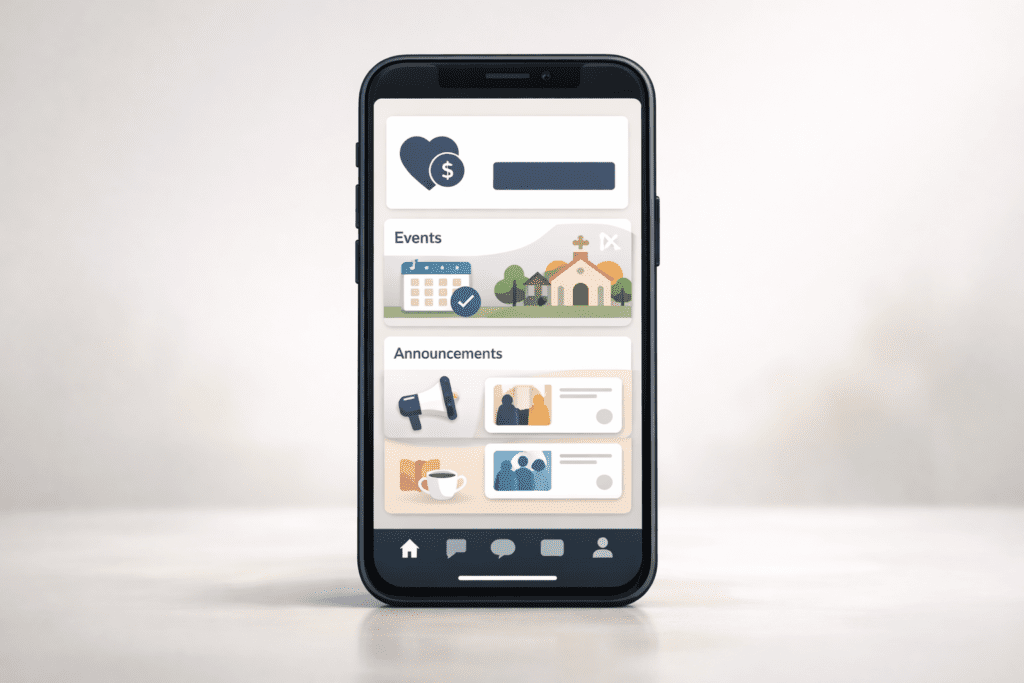
Many churches today feel the tension of trying to stay connected in a world where people live on their phones. Members expect information to be accessible, giving to be simple, and communication to be clear. When systems are fragmented, ministry teams spend more time managing tools than shepherding people. This is where a well-designed church app can bring clarity and unity to digital ministry.
Rather than adding another layer of technology, the goal of a church app is to simplify how people engage with the life of the church. When giving, events, and communication are integrated into one experience, members know exactly where to go, and staff know exactly where information lives. The result is less confusion, stronger participation, and a healthier rhythm for ministry.
Churches often begin by rethinking how generosity fits into daily discipleship. Tools like church donation management tools help establish a foundation where giving is consistent, transparent, and easy to access—especially when connected to a mobile-first experience.
Why a church app matters for modern ministry
A church app is not about keeping up with trends. It is about meeting people where they already are. Most members carry their primary connection to the world in their pocket, and ministry that fits naturally into that reality removes unnecessary barriers.
When churches rely only on email, printed bulletins, or scattered social posts, important messages are often missed. A unified mobile experience creates a dependable channel that members can return to throughout the week. This consistency builds trust and helps the church communicate with clarity and care.
In pastoral terms, a church app becomes a tool of presence. It allows the church to remain connected beyond Sunday services, supporting discipleship, generosity, and participation during everyday life.
How a church app supports integrated giving
Generosity is deeply spiritual, but it is also practical. When giving is complicated or hidden behind multiple steps, people are less likely to participate consistently. A church app removes friction by making generosity accessible in the same place members already receive updates and resources.
Integrated giving allows members to give in the moment—during a sermon, after a prayer, or when they feel led during the week. This supports a discipleship-centered view of generosity rather than a once-a-week transaction.
From an administrative perspective, a connected mobile experience reduces manual work. Gifts are recorded accurately, records stay up to date, and staff gain clearer insight without jumping between systems.
Using a church app to streamline events and involvement
Events are often where churches experience the most logistical strain. Sign-ups happen in multiple places, reminders go out inconsistently, and last-minute changes are hard to communicate. A church app simplifies this by making events visible and actionable in one place.
Members can browse upcoming opportunities, register quickly, and receive reminders without searching through emails or announcements. This increases participation while lowering confusion.
For staff and volunteers, event coordination becomes more manageable. Attendance data stays connected to member records, and communication flows through a single channel rather than scattered platforms.
Church app communication as pastoral care
Communication is not just informational; it is relational. When churches communicate clearly and consistently, people feel seen and valued. A church app supports this by offering a direct line of communication that does not rely on algorithms or crowded inboxes.
Push notifications, in-app messages, and centralized announcements ensure that critical information reaches people in a timely way. This is especially important during schedule changes, emergencies, or pastoral moments that require sensitivity.
Because communication happens in a familiar, trusted space, members are more likely to engage rather than tune out.
Reducing complexity with an integrated church app
Many churches struggle with tool overload. One system for giving, another for events, another for communication, and yet another for member records. Each additional platform increases training needs and the likelihood of errors.
A thoughtfully integrated church app brings these elements together. Instead of managing multiple logins and dashboards, staff work within a unified environment that reflects how ministry actually functions.
This approach aligns with the broader movement toward all-in-one church management software, where technology serves ministry rather than distracting from it.
Church app adoption and member experience
One concern leaders often raise is whether people will actually use a church app. Adoption depends less on novelty and more on usefulness. When the app replaces existing workflows instead of adding another option, engagement increases naturally.
If members know that giving, events, sermons, and announcements all live in one place, the app becomes part of their regular rhythm. Clear onboarding, consistent use from the pulpit, and gentle reminders help establish this habit.
Over time, the app becomes the primary digital home for the church community.
Pastoral considerations for digital engagement
Technology should never replace relationships, but it can support them. A church app works best when it reflects the church’s pastoral heart rather than feeling transactional or impersonal.
Messages should sound like they come from shepherds, not systems. Giving invitations should be rooted in vision and gratitude. Event reminders should emphasize belonging rather than obligation.
When a church app is shaped by pastoral values, it strengthens connection rather than creating distance.
Scalability and long-term ministry health
As churches grow or change, systems that once worked may begin to strain. A flexible church app allows ministry to scale without constant restructuring.
New ministries, additional services, and expanding outreach efforts can all be supported within the same digital framework. This continuity helps maintain clarity for members even as the church evolves.
Long-term, this stability protects staff capacity and reduces burnout caused by constantly shifting tools.
Security, trust, and stewardship in a church app
Handling personal information and financial data requires care. Members trust the church to steward their data responsibly, and that trust must be honored.
A secure church app supports this responsibility by keeping sensitive interactions within a controlled environment. Clear permissions, consistent processes, and transparent communication reinforce confidence.
This trust is essential for sustained engagement and generosity.
Evaluating whether a church app is the right next step
Not every church is in the same season. The decision to invest in a church app should be guided by ministry goals rather than pressure or comparison.
Questions worth asking include: Are our current systems creating confusion? Are members missing important information? Is staff time being consumed by tool management rather than ministry?
If the answer to these questions is yes, a unified mobile experience may be a wise next step.
Building alignment between leadership and technology
Successful digital ministry requires alignment between pastoral leadership, administrative teams, and technical tools. A church app should support the church’s mission, not define it.
When leadership views technology as a servant to vision, decisions become clearer. Features are chosen intentionally, and implementation reflects shared priorities.
This alignment fosters unity and prevents technology from becoming a source of tension.
Supporting discipleship through everyday engagement
Discipleship happens in small, consistent moments. A church app supports this by keeping Scripture, sermons, and resources close at hand.
When members can revisit messages, respond to prayer prompts, or give generously in moments of conviction, faith becomes integrated into daily life.
This steady presence reinforces spiritual formation beyond structured programs.
Preparing your church for future communication needs
Communication expectations continue to evolve. What feels sufficient today may feel outdated in a few years. A flexible church app positions the church to adapt without starting over.
As new communication channels emerge, an integrated foundation makes it easier to incorporate them thoughtfully.
This future readiness protects the church from constant disruption.
Church app implementation as a ministry process
Launching a church app is not just a technical project; it is a ministry process. Training, communication, and pastoral framing all matter.
When leaders explain why the app exists and how it serves the church, members are more likely to embrace it. Clear expectations and consistent use reinforce its value.
Over time, the app becomes woven into the life of the congregation.
Moving forward with confidence and clarity
An integrated digital experience can help churches focus less on managing systems and more on caring for people. When giving, events, and communication work together, ministry feels lighter and more intentional.
For churches exploring what this could look like in practice, it can be helpful to see how Connect My Church works and evaluate whether an integrated church app aligns with current and future ministry needs.
Ultimately, the goal is not better technology for its own sake, but healthier connection, clearer communication, and more faithful stewardship in every season of ministry.