

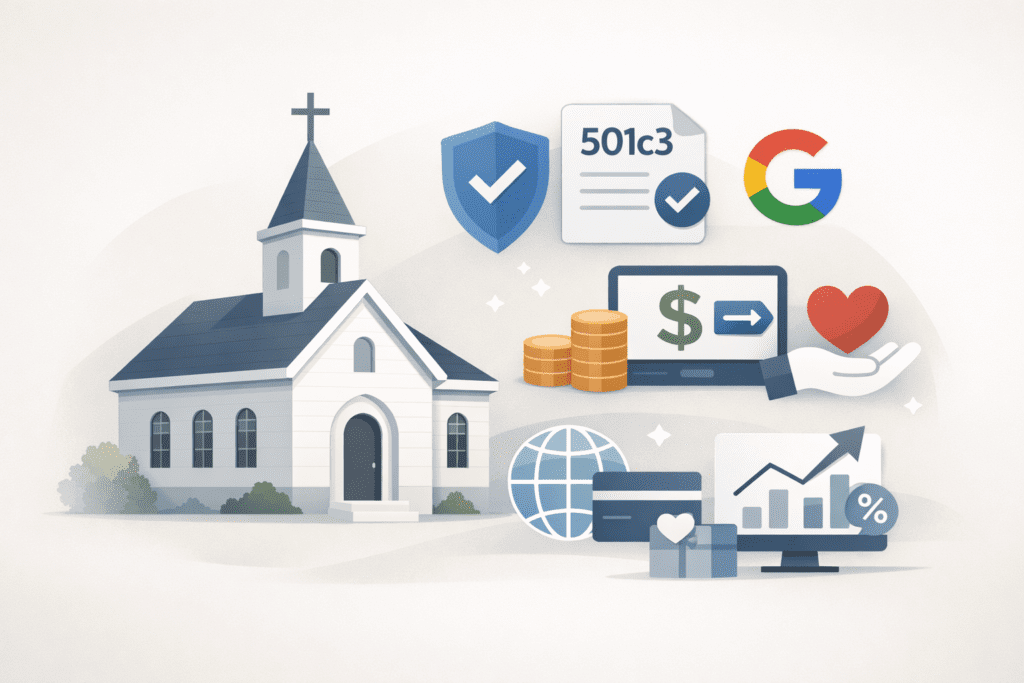
Church leaders often hear the term 501c3 used casually, but its implications are anything but small. This nonprofit designation shapes how churches receive donations, issue tax receipts, use payment platforms, and access technology designed specifically for ministries. When misunderstood, it can create friction for givers and administrative stress for staff. When understood well, it becomes a foundation for trust, generosity, and good stewardship.
This article walks through the practical realities of 501c3 status in plain, pastoral language. Rather than focusing on legal jargon, the goal is to help church leaders understand how nonprofit status affects everyday giving, payments, and systems—and how to make wise, ministry-minded decisions.
What does 501c3 status actually mean for a church?
The term 501c3 comes from the U.S. Internal Revenue Code and refers to organizations recognized as tax-exempt nonprofits. Churches fall under this category, which allows them to receive donations that are tax-deductible for the giver.
For many churches, this status exists quietly in the background. It may feel automatic or assumed. Yet behind the scenes, nonprofit recognition is what allows donors to give confidently, knowing their generosity is handled properly and acknowledged correctly.
From a pastoral perspective, this matters because giving is not just a transaction—it is an act of worship. When systems support that act with clarity and integrity, it removes distractions and protects the sacred trust between the church and its people.
Why 501c3 matters for church giving and generosity
At its core, 501c3 status determines whether a church can issue valid tax-deductible donation receipts. This affects year-end statements, online giving confirmations, and donor confidence.
Most modern givers expect clarity. They want to know their gifts are processed securely, recorded accurately, and acknowledged appropriately. Without proper nonprofit recognition, churches may face limitations in how donations are handled or reported.
This is why many ministries rely on church donation management tools that are built with nonprofit requirements in mind. These systems are designed to support compliant giving while reducing administrative burden.
How 501c3 impacts online giving and payment processing
Online giving platforms do more than move money. They manage donor data, generate receipts, support recurring gifts, and provide reporting that aligns with nonprofit standards. Most of these platforms require verification of nonprofit status before enabling full functionality.
501c3 recognition often affects:
- Eligibility for donation processing services
- Ability to issue automated tax receipts
- Access to reduced nonprofit processing rates
- Support for recurring and scheduled giving
When churches understand this connection, they are better equipped to choose payment systems that serve both ministry and administration well.
501c3 status and donor trust
Trust is central to generosity. Donors give not only because they believe in the mission, but because they trust the church to steward resources faithfully.
Clear nonprofit standing reassures givers that the church is operating transparently. It signals accountability, even when formal reporting requirements are minimal. For first-time givers especially, this clarity can remove hesitation.
In pastoral terms, nonprofit status supports the relational side of giving. It helps ensure that generosity flows from gratitude, not uncertainty.
How church software is shaped by nonprofit requirements
Many church platforms are intentionally built to serve nonprofit organizations. This affects how features are designed, how data is handled, and how systems integrate.
For example, software may assume tax-deductible giving by default, structure donor records accordingly, and provide reports that align with nonprofit practices. These assumptions are rooted in 501c3 realities.
As churches grow, using all-in-one church management software can help unify giving, people management, and communications under one system designed for nonprofit ministry contexts.
What happens if nonprofit status is unclear or misapplied?
When nonprofit recognition is missing or misunderstood, churches may encounter friction. This can include delayed platform approvals, limited features, or confusion around donor receipts.
While churches often have unique legal considerations, technology providers still need clarity. Verifying nonprofit standing helps ensure smooth onboarding and long-term stability.
Addressing these issues early protects both the church and its givers from unnecessary frustration.
501c3 and recurring giving
Recurring generosity has become an essential part of church sustainability. Many families give weekly or monthly through automated systems.
These systems rely on nonprofit recognition to function properly. 501c3 status enables platforms to issue ongoing receipts, track cumulative giving, and provide accurate year-end summaries.
From a ministry standpoint, this consistency supports planning and reduces financial anxiety, allowing leaders to focus more fully on shepherding people.
Pastoral stewardship and nonprofit responsibility
Stewardship is not only about how funds are used, but how they are received and managed. Nonprofit recognition supports this stewardship by providing a framework for accountability.
Church leaders do not need to become legal experts, but they do benefit from understanding how nonprofit status shapes systems and expectations. This knowledge empowers wise decisions and protects the church’s witness.
In this way, 501c3 status becomes a tool for pastoral care—helping leaders remove obstacles that might distract from generosity or mission.
How payments, platforms, and people intersect
Giving systems sit at the intersection of technology and trust. When aligned with nonprofit realities, they create a smooth experience for givers and staff alike.
This alignment ensures that payment processing, donor communication, and financial reporting all tell the same story—one of integrity, clarity, and care.
Churches that approach these systems thoughtfully often find that generosity increases, not because of pressure, but because of confidence.
Common misconceptions about 501c3 and churches
Some leaders assume nonprofit status is only a formality. Others believe it has little impact on day-to-day ministry. In practice, it quietly shapes many operational decisions.
Another misconception is that all platforms treat churches the same regardless of status. In reality, most systems are designed with nonprofit verification as a baseline.
Clarifying these misunderstandings helps churches avoid surprises and choose tools that fit their ministry context.
Supporting generosity with the right systems
The goal of any giving system is not complexity, but clarity. When technology aligns with nonprofit requirements, it fades into the background and supports worship rather than interrupting it.
This is why many churches seek solutions that are intentionally built for ministries, rather than adapting generic tools.
When systems respect the unique nature of church giving, generosity becomes simpler and more sustainable.
Looking ahead with confidence
Understanding 501c3 status helps church leaders approach giving and payments with confidence rather than caution. It provides a foundation for choosing platforms, communicating with donors, and stewarding resources well.
As churches grow and adapt, having systems that align with nonprofit realities reduces friction and supports long-term ministry health.
Next steps for church leaders
If you are reviewing your giving systems or planning for future growth, it may be helpful to step back and consider how your current tools align with nonprofit needs.
Thoughtful technology choices can free your team from administrative stress and help your congregation give with clarity and joy.
If you want to explore options designed specifically for churches and nonprofits, see how Connect My Church works and how it supports giving, payments, and ministry operations in a unified way.