

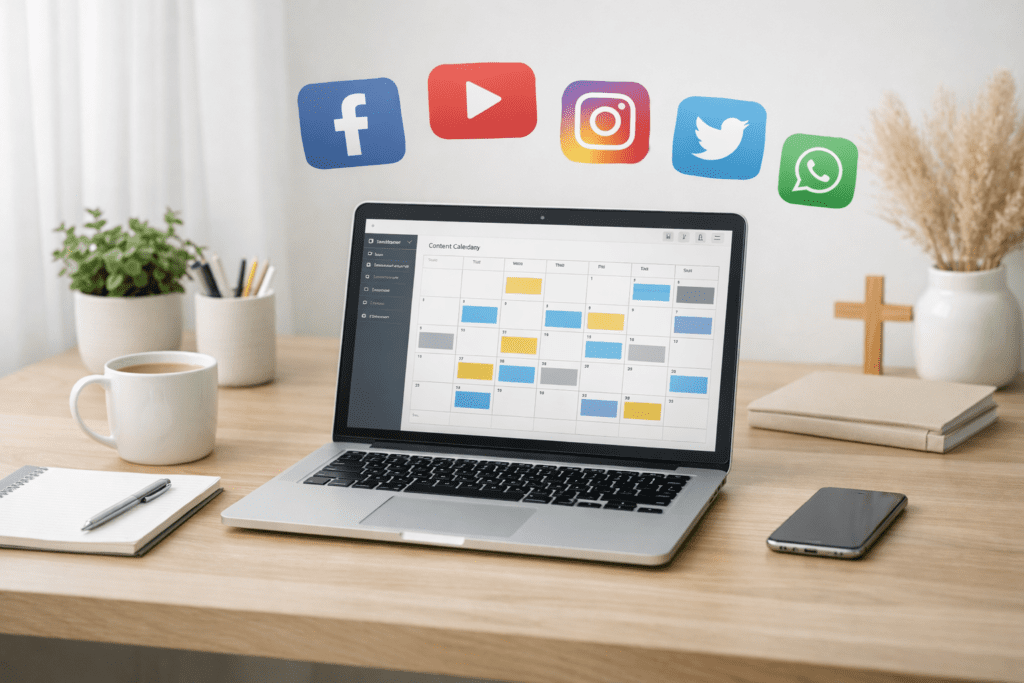
Social media scheduling helps churches stay consistent online without adding stress to already full ministry schedules. By planning and automating posts in advance, churches can communicate clearly, engage members, and reach new people throughout the week.
Instead of scrambling to post in real time, scheduling allows your church to communicate with intention. Messages are prepared thoughtfully, published consistently, and aligned with what is happening in the life of the church.
For many ministry teams, social media scheduling is not about doing more online. It is about creating margin, reducing last-minute pressure, and ensuring communication supports ministry rather than competing with it.
How can churches create a simple social media scheduling process?
A simple social media scheduling process begins with clarity and realistic expectations. Churches do not need to be on every platform or post every day to be effective. The goal is consistency, not complexity.
Churches often struggle when social media is treated as an afterthought. A sustainable process works best when social media planning is included alongside weekly or monthly ministry planning.
- Select one or two platforms your church already uses consistently
- Decide on a posting frequency that fits your team’s capacity
- Set aside time to prepare content in batches
- Schedule posts instead of posting manually
This approach removes the pressure to “come up with something to post” every day. Instead, content is created with purpose and aligned with upcoming services, events, and ministry rhythms.
Many churches benefit from using church social media management tools to keep planning, approvals, and scheduling organized in one place.
What types of content should churches schedule?
Social media is most effective when it reflects real ministry life while also communicating practical information. Scheduling allows churches to balance both without overwhelming followers.
Rather than posting only announcements, churches can plan a mix of content that informs, encourages, and invites engagement.
- Service reminders and post-service follow-ups
- Sermon quotes or short video clips
- Event promotions and reminders
- Volunteer appreciation and ministry highlights
- Scripture, prayer prompts, or encouragement
When content is scheduled in advance, churches have time to write clearer captions, choose better visuals, and ensure tone aligns with ministry values.
This also helps prevent long periods of silence followed by rushed or repetitive posts.
How often should churches schedule social media posts?
Posting frequency should support consistency without creating burnout. More posts do not automatically lead to better engagement.
For many churches, two to four posts per week on each active platform is sustainable and effective. This frequency keeps communication visible while allowing teams to maintain quality.
A simple weekly structure might include:
- One encouragement or scripture-based post
- One informational or reminder post
- One story, testimony, or ministry moment
Churches should choose a rhythm they can maintain long-term. Consistent posting builds trust with followers, while irregular posting can make communication feel unreliable.
What tools help churches manage social media scheduling?
The best scheduling tools reduce manual work and support existing communication workflows. Churches benefit most from tools that feel intuitive and aligned with ministry needs.
Scheduling works best when social media is not treated as a separate system. Communication becomes clearer when posts align with announcements, events, and service planning.
Using a centralized church communication system helps teams coordinate messaging across platforms without duplicating effort.
Regardless of the tool, the purpose remains the same: simplify communication and reduce last-minute pressure.
How does social media scheduling improve church engagement?
Scheduling improves engagement by creating a reliable presence. When posts are shared consistently, followers know when to expect updates.
Benefits of scheduling include:
- Fewer missed communication opportunities
- More thoughtful and intentional messaging
- Better alignment with ministry events
- Less stress for staff and volunteers
Consistency also supports connection with people who may not attend every week. Scheduled posts quietly reinforce belonging and awareness throughout the week.
Over time, this steady presence builds familiarity without demanding constant attention.
How can churches plan social media around events and seasons?
Church calendars naturally revolve around seasons such as Easter, Christmas, sermon series, and special events. Social media scheduling allows churches to plan communication around these moments in advance.
Instead of reacting as events approach, churches can:
- Schedule reminders leading up to important dates
- Prepare follow-up posts after services or gatherings
- Align content with sermon themes or series
This approach ensures communication feels timely and cohesive. It also reduces stress during busy seasons when ministry teams are already stretched.
How can churches involve volunteers in social media scheduling?
Scheduling makes volunteer involvement more practical and sustainable. Tasks can be clearly defined, reviewed, and approved ahead of time.
Instead of asking volunteers to post in real time, churches can invite help with preparation.
- Volunteers can help draft captions or collect photos
- Posts can be reviewed before scheduling
- Clear guidelines help maintain consistency
This structure allows churches to benefit from volunteer creativity while maintaining appropriate oversight.
Scheduling also reduces pressure on volunteers by removing the expectation of constant availability.
How can churches evaluate whether social media scheduling is working?
Effectiveness should be measured by clarity and consistency, not just likes or shares. Churches should consider whether scheduling is improving workflow and communication.
Helpful evaluation questions include:
- Are posts going out consistently?
- Is less time spent on last-minute posting?
- Are messages aligned with church events?
- Do teams feel less overwhelmed?
When scheduling supports ministry rather than adding stress, it is doing its job.
Frequently Asked Questions
Do small churches really need social media scheduling?
Yes. Scheduling helps small churches stay consistent without requiring daily attention.
Is it better to post live or scheduled content?
Scheduled content provides consistency, while live posts can complement special moments.
How far in advance should churches schedule posts?
Many churches schedule content one to four weeks ahead.
What platforms should churches focus on first?
Churches should start with platforms their congregation already uses.
Can scheduled posts still feel personal?
Yes. Thoughtful content planning supports authenticity rather than reducing it.
Who should oversee social media scheduling?
This can be handled by staff or trained volunteers with clear guidelines.
What happens when plans change after posts are scheduled?
Scheduled posts can be edited, paused, or rescheduled as needed.
Social media scheduling gives churches structure without removing flexibility. When communication is planned and aligned, ministry teams can focus more energy on people instead of platforms.
If your church is ready for a more organized approach, explore our church communication solutions to see how social scheduling fits into a broader communication strategy.