

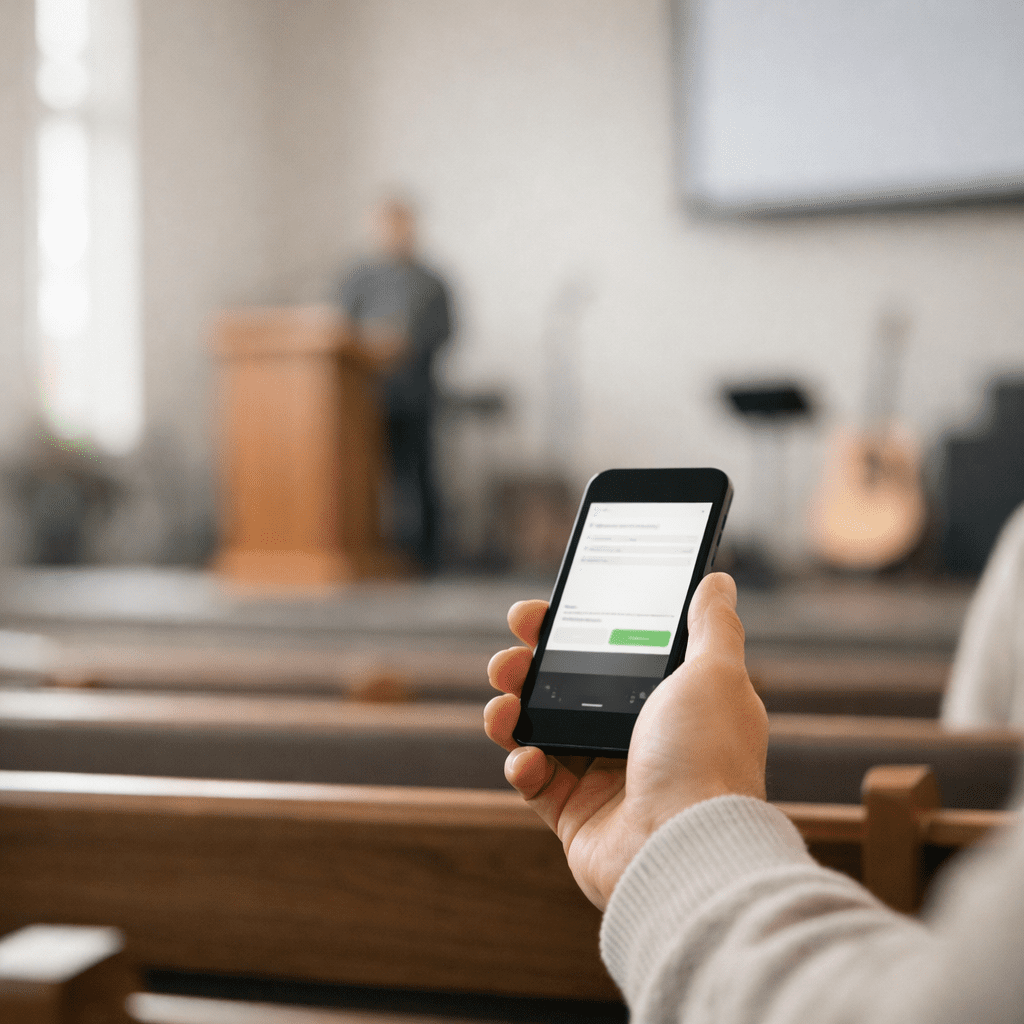
Text-to-give is a mobile giving method that allows people to donate to a church using their phones with minimal friction. By removing barriers between inspiration and action, text-to-give helps churches increase online giving, support recurring generosity, and engage both regular attenders and first-time guests. When implemented well, it becomes a natural part of how generosity works in modern church life.
This guide explains how text-to-give works, how churches typically set it up, best practices that improve adoption, and common mistakes to avoid. As part of a broader church donation management tools strategy, text-to-give can strengthen stewardship while remaining simple for donors and church staff alike.
What is text-to-give and how does it work for churches?
Text-to-give is a giving method where donors initiate a donation by sending a text message to a designated phone number using a specific keyword or amount. After sending the text, the donor receives a secure response that guides them through completing their gift on their mobile device.
For first-time givers, the process usually involves entering basic payment details, such as a card or bank information. Once that step is complete, future donations can often be completed in seconds. This simplicity makes text-to-give especially effective during moments when people are already engaged, such as during a service, a special offering, or a campaign update.
From the church’s perspective, text-to-give works best when it is integrated into a broader giving system rather than treated as a standalone feature. It should connect naturally with other online giving options, reporting workflows, and follow-up communication.
Why does text-to-give matter for today’s churches?
Many people no longer carry cash or checks, even when they attend church regularly. Text-to-give meets people where they already are: on their phones. By offering a mobile-first option, churches reduce friction and make generosity more accessible.
Text-to-give is also guest-friendly. First-time visitors may feel hesitant about passing a plate or navigating an unfamiliar website. A simple text instruction feels familiar, private, and low-pressure. This makes text-to-give especially valuable for outreach-focused churches and special events.
Over time, text-to-give supports healthier stewardship by encouraging consistency. When giving is easy, people are more likely to participate regularly rather than sporadically.
How can a church increase online giving with text-to-give?
Churches increase online giving with text-to-give by focusing on clarity, consistency, and timing. The goal is not just to offer the option, but to help people understand how and when to use it.
Clear communication is essential. Churches should explain text-to-give verbally during services, visually on screens, and digitally through follow-up communications. Repetition helps normalize the process and removes uncertainty.
- Use a simple, memorable keyword
- Explain text-to-give step-by-step the first few times
- Include giving moments at natural points in services
- Reinforce generosity with stories and outcomes, not pressure
Text-to-give works best when it is supported by strong church communication systems that keep messaging consistent across services, emails, and events.
How do you set up text-to-give for a church?
Setting up text-to-give typically involves several key steps. While the exact process depends on the tools a church uses, the overall goal is to make giving intuitive for donors and manageable for staff.
The first step is choosing a text-to-give solution that aligns with the church’s overall giving approach. Churches should think about ease of use, donor experience, and how text-to-give fits with existing workflows.
- Select a text-to-give provider that supports your ministry goals
- Choose a short phone number and easy keyword
- Configure donation funds and default options
- Enable recurring giving where appropriate
- Test the entire donor experience internally
- Train staff and volunteers to explain it clearly
Testing is especially important. Church leaders should walk through the experience from a donor’s perspective to identify confusing steps or unclear instructions before launching publicly.
What are best practices for church text-to-give?
Churches that see strong adoption of text-to-give tend to follow a few consistent best practices. These practices focus on reducing confusion, building trust, and reinforcing generosity over time.
- Keep instructions simple and visible
- Use the same keyword everywhere
- Explain security and privacy clearly
- Thank donors promptly after each gift
- Encourage recurring giving as a next step
It is also important to treat text-to-give as part of discipleship, not just a transaction. When generosity is framed as worship and mission support, people understand the “why” behind the tool.
How should churches promote text-to-give?
Promotion plays a major role in adoption. Even the best text-to-give setup will underperform if people do not understand how to use it or forget that it exists.
During services, leaders should calmly explain text-to-give rather than rushing through instructions. Visual cues on screens or printed materials help reinforce the message.
Outside of services, churches can reference text-to-give in follow-up emails, event communications, and seasonal campaigns. Consistent but gentle reminders help make it part of normal church life.
What mistakes should churches avoid with text-to-give?
Several common mistakes can limit the effectiveness of text-to-give. Avoiding these issues can significantly improve donor experience and participation.
- Using long or confusing keywords
- Assuming people already know how it works
- Changing keywords frequently
- Failing to connect text-to-give with other giving options
- Overemphasizing technology instead of mission
Text-to-give should feel helpful, not distracting. Simplicity and consistency are far more effective than novelty.
How does text-to-give support recurring generosity?
One of the biggest benefits of text-to-give is how it supports recurring generosity. Once a donor completes their initial setup, future gifts become quick and convenient.
Churches can gently introduce recurring giving by explaining how consistent generosity supports long-term ministry planning. When people understand the impact of steady giving, they are more likely to participate.
Text-to-give removes the friction that often prevents people from following through on good intentions, especially during busy seasons of life.
How does text-to-give fit into a broader giving strategy?
Text-to-give works best when it is one part of a comprehensive giving ecosystem. Churches should view it alongside online giving pages, in-person options, and communication workflows.
Rather than replacing other methods, text-to-give complements them. Different people prefer different giving experiences, and offering multiple options helps churches serve a wider range of donors.
Frequently Asked Questions About Text-to-Give
Is text-to-give safe for churches?
Text-to-give systems generally rely on secure payment processing and encrypted connections. Churches should communicate security clearly to build trust.
Do donors need a smartphone to use text-to-give?
Most text-to-give experiences work best on smartphones, since donors complete gifts through a mobile browser.
Can text-to-give be used outside of services?
Yes. Churches often use text-to-give during events, campaigns, and follow-up communications.
How long does it take to launch text-to-give?
Launch timelines vary by platform and preparation, but many churches can begin within days once setup is complete.
Does text-to-give replace online giving pages?
No. Text-to-give works best as part of a broader online giving strategy.
How often should churches promote text-to-give?
Consistent, gentle reminders work better than one-time announcements.
Can text-to-give support multiple funds?
If you’re evaluating how text-to-give fits into your overall generosity strategy, it can help to see how different tools work together. You can explore giving and engagement solutions designed specifically for churches.