

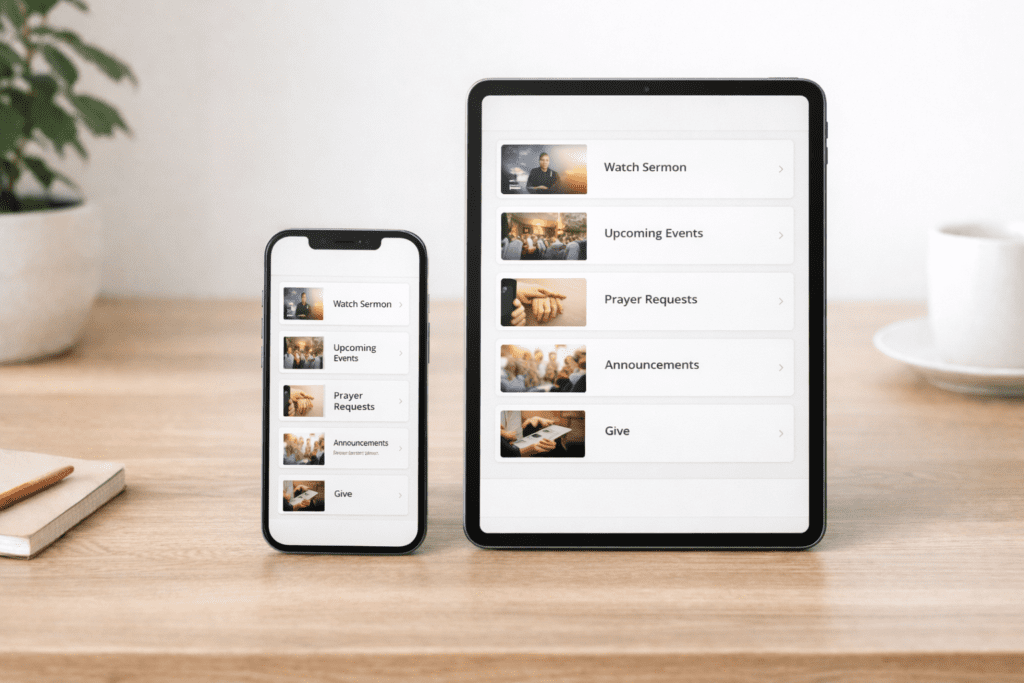
A church mobile app can be one of the most effective tools for strengthening communication, increasing engagement, and helping people take next steps throughout the week. When designed intentionally, a church mobile app becomes more than a digital bulletin—it becomes a central hub for ministry life.
The challenge is knowing which features truly matter. Churches often feel pressure to include every possible tool, but the most successful apps focus on clarity, simplicity, and alignment with real ministry needs. If you are exploring custom church app development, understanding feature priorities is the first step toward building something people actually use.
Do churches really need a mobile app?
Not every church needs a mobile app right away. Many churches start with a website, email, and social media, and those tools can be effective for a season. However, as ministries grow, communication often becomes scattered across platforms, and engagement becomes harder to sustain.
A church mobile app becomes valuable when people struggle to find information, miss important updates, or disengage between Sundays. An app creates a consistent, distraction-free space where your church controls the message and experience.
Instead of competing for attention in crowded inboxes or social feeds, a mobile app offers a direct connection to members, volunteers, and even first-time visitors.
What problems should a church mobile app solve?
The most effective church mobile apps are built around problems, not features. Before deciding what to include, it helps to identify the friction points in your current communication and engagement strategy.
- Members missing announcements or schedule changes
- Difficulty accessing sermons and past messages
- Confusion about events, groups, or next steps
- Inconsistent engagement outside of Sunday services
If your app clearly solves these problems, it becomes a ministry tool that supports discipleship rather than another digital obligation.
Which church mobile app features matter most?
While feature needs vary by church size and structure, certain features consistently provide the highest value across ministries.
1. Sermons and media access
Sermon content is one of the most-used features in any church mobile app. Members want quick, reliable access to messages they may have missed or want to revisit during the week.
When sermons are easy to find and organized clearly, your app supports spiritual growth beyond Sunday. Including video, audio, and notes helps accommodate different preferences and schedules.
2. Push notifications for important updates
Push notifications allow churches to communicate urgent or timely information without overwhelming people. When used thoughtfully, notifications are one of the most effective engagement tools available.
The key is restraint. Notifications should communicate value—service changes, event reminders, or significant ministry updates—not replace every announcement.
Push notifications are most effective when coordinated with a broader church communication system, ensuring consistency across email, text, and app messaging.
3. Events and calendar integration
A well-organized event calendar reduces confusion and increases participation. Members should be able to see what is happening, when it is happening, and how to get involved—all without searching multiple platforms.
Clear event descriptions, dates, and simple navigation help people move from awareness to action.
4. Giving access
Mobile giving is not about pressure—it is about accessibility. For many churches, a mobile app makes it easier for consistent givers to remain faithful and for others to give when they feel prompted.
Giving features should be easy to find but never intrusive. When generosity tools are thoughtfully placed, they support stewardship rather than distract from worship.
5. Simple, intuitive navigation
One of the most overlooked “features” is usability. An app with too many menu items or unclear labels creates frustration and abandonment.
The most effective church mobile apps limit choices, use familiar language, and prioritize the most important actions. Simplicity builds trust and encourages long-term use.
Which church app features often create problems?
More features do not automatically mean more value. In fact, unnecessary complexity often reduces engagement.
- Overloaded home screens with too many options
- Custom sections that duplicate website content
- Features that require constant manual updates
- Social-style feeds with low participation
If a feature cannot be easily explained, maintained, or used regularly, it may create more friction than benefit.
How does a custom church mobile app differ from off-the-shelf apps?
Off-the-shelf church apps can be a helpful starting point, especially for churches with limited needs. They typically offer standard features and faster setup but limited flexibility.
A custom church mobile app allows your church to align the app with your ministry structure, branding, and communication workflows. Instead of adapting your processes to the software, the software adapts to your ministry.
The goal of customization is not complexity—it is alignment. A custom approach ensures the app reflects how your church actually functions.
How should churches prioritize mobile app features?
Feature prioritization works best when churches take a phased approach. Rather than launching everything at once, focus on core needs and expand intentionally.
- Core content: sermons, announcements, basic information
- Communication tools: notifications and updates
- Engagement tools: events and giving
- Advanced features added based on real usage
This approach allows your church to evaluate what people actually use and avoid overwhelming first-time app users.
How do you encourage people to actually use the app?
Adoption does not happen automatically. Churches that see strong engagement consistently communicate the app’s value.
- Explain what problem the app solves
- Demonstrate the app briefly during services
- Use the app consistently for key updates
- Keep onboarding simple and clear
When the app becomes the easiest way to stay connected, usage grows naturally.
FAQ: Church Mobile App Features
What is the most important feature in a church mobile app?
Consistent access to sermons and key information is typically the most-used feature.
Will a church mobile app replace our website?
No. A mobile app complements your website by serving your most engaged audience.
How often should push notifications be sent?
Only when the message is timely and relevant. Overuse leads to disengagement.
Is a church mobile app helpful for small churches?
Yes, when the app focuses on clarity rather than advanced functionality.
Should first-time visitors download the app?
Yes, if the app clearly helps them understand next steps and stay connected.
How long does it take for members to adopt the app?
Adoption usually grows over several months as trust and habit develop.
Next steps for your church mobile app
The most effective church mobile apps are not built around trends—they are built around ministry goals. When features are chosen intentionally, your app becomes a trusted tool for connection, communication, and growth.
If you are evaluating what a church mobile app could look like for your ministry, you can explore church app solutions and see how a thoughtful, custom approach supports your church’s mission.